Costume guide
Albanian costume and the xhubleta
How Albanian traditional dress varies by region, what the xhubleta and the qeleshe are, and what to look for when you try costume on in Tirana.
Hold a place at the show ↗Dress as a map
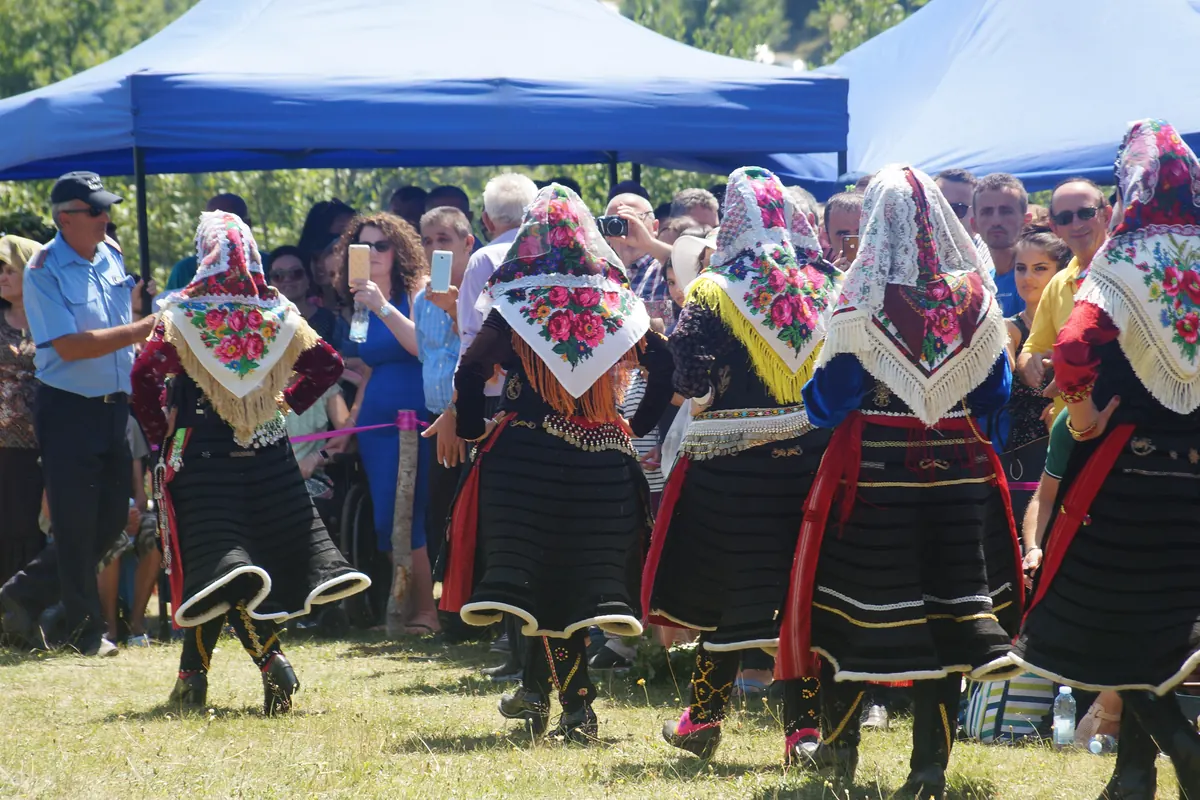
What people wore in Albania depended on where they lived. Wikipedia says almost every region of the country developed its own style of costume, and its article on Albanian culture counts more than two hundred forms, with white as the dominant colour. These garments are now mainly worn at festivals, religious holidays and weddings, and by dance groups, though some older people in the north still wear traditional dress daily. A costume hall is therefore a quick way to read the country's geography in cloth, and the differences are easy to spot once you look for colour, cut and headwear.
The xhubleta
UNESCO describes the xhubleta as a handcrafted garment worn by highland women and girls in northern Albania, with an undulating bell form. It is predominantly black with colourful embroidered motifs, and making one involves preparing the shajak, a woven felt, then cutting, sewing and embroidering symbolic figures. It was once worn from puberty and signalled the wearer's social and economic status. UNESCO inscribed it in 2022 on its list of heritage in need of urgent safeguarding, because few women now know the whole process.
Why it declined
UNESCO links the xhubleta's decline to the socialist period. New policies in the 1960s changed daily life in the mountain communities, women worked in agricultural cooperatives where the garment was impractical, and collectivisation cut off raw materials. Traditional family-based transmission is now rare. The garment has nevertheless kept its social and spiritual meaning and is still considered part of highland identity, which is the reason it features in displays like the one at Albanian Night. If you meet one on a display stand, look at its bell shape, because that undulating form is the first thing UNESCO's description mentions.
The qeleshe or plis
The qeleshe, also called the plis, is the men's cap worn in Albania, Kosovo and Albanian-speaking parts of the wider region. Wikipedia says it is cone-shaped in central Albania, around Tirana, Durrës and Kavaja, and round in the north and in Kosovo, and that the hat was typically worn between the fifteenth and eighteenth centuries. Its article on Albanian culture calls the white cap one of the best-known Albanian cultural symbols. If you are offered one in a costume hall, notice the shape: it hints at where the outfit comes from.
Symbols in the stitching
Wikipedia says Albanian folk dress is decorated with symbolic elements such as suns, eagles, moons, stars and snakes, and traces them to antique pagan origins. Treat the origins as a tradition rather than proven history, but the motifs themselves are easy to spot on embroidery and felt. The venue's costume hall adds belts, jewellery and headpieces to the choice, so you can try several details and ask the attendant what each represents. A good question is which region a piece comes from, because that tells you what the embroidery and colours are likely to mean.
Wedding dress and faith
Wikipedia's article on Albanian culture notes that bridal dress varied by religion and place. The dress of a Muslim bride is described as elegant and sheer, while the Catholic bride's is described as full of colour. A Catholic bride in Shkodra wore a sheer white dress woven with gold thread and long skirt-like trousers called barnaveke. Those details show why a costume hall includes bridal pieces, and why the show's staged wedding gives the costumes a role as well as a look.
Trying it on in Tirana
Albanian Night keeps a costume hall that displays garments such as the xhubleta and the qeleshe, and attendants help guests dress and explain what each piece means. Pieces come from different regions, so pick one that interests you rather than the one that fits first. Dressing up is optional at the show, but it is the quickest way to feel the weight, cut and colour of regional dress, and a good moment to ask about the stitching.
Sources